
NO. Not unless you really want it to.
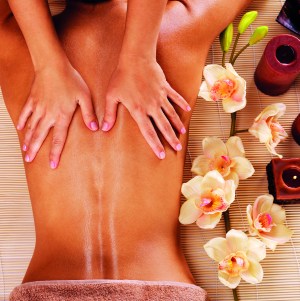
I’ve been a Holistic Therapist for over 12 years. I specialise in Massage and Reflexology. As with any business, if you know you’re stuff, you don’t stop to think about how others perceive it. Why would you know that there are so many different massage techniques and levels of expertise?
Many people choose Deep Tissue or Sports Massage to avoid getting a light touch ‘beauty massage’. But a good massage does not mean you must feel sore for days afterwards! Yes, really.
I believe we are all different and therefore require an holistic approach – customised techniques depending on your individual needs – not a one-size (or technique) fits all.
So, there’s not just the choice of either Beauty OR Deep Tissue/Sports Massage. There are many many styles in-between. It is possible to have a combination massage, to your preferred pressure, that gets rid of painful areas, knots and tension AND doesn’t leave you feeling sore for days afterwards. Sound good?
Sports is generally as it sounds – mainly for athletes, runners, sports-persons, etc. These are the techniques which may hurt you more, especially if you are not an athlete and have built up certain muscles. But I can certainly reduce that pain and soreness with much less pressure.
Generally, you should leave a massage feeling relaxed, invigorated and with less pain and tension – but most of all, NOT TOO SORE. Of course, if you’re in bad shape from poor posture and a stressful lifestyle, I may need to do some trigger-pointing and deep tissue techniques which can be painful for a while – but you definitely won’t be sore for days afterwards.
I intuitively work with your body to find out what it needs and where the pain or tension is coming from. Muscle has memory and needs to be gently coaxed back to relaxing again. Sometimes this can be tension held from a memory of a past injury or trauma.
Not all Massage Therapist are the same
As massage is not regulated as say Physiotherapists are (so you know they trained to a certain level), you can have someone with a Level 1 diploma and little or no knowledge of Anatomy & Physiology practicing professionally alongside those with higher skill levels – who’ve studied for years and have a good understanding of massage techniques, body systems and structure. Always enquire about qualifications and study.
It all depends on what you require. Someone with a Level 1 diploma could give you a lovely relaxing massage, but you would need more expertise if you have structural issues or ongoing pain – you need the core issue dealt with by someone with more knowledge of muscle and bone structure.
As I am trained as a Holistic Therapist (treating the ‘whole’ person – adapting for each individual) I don’t have a particular style – each client’s different needs require different techniques so I tend to mix up the styles intuitively for each client.
So what should you expect from a massage?
For me personally, I like a consultation beforehand with a complete picture of you and your lifestyle; you can discuss what you want from the massage or you can leave it to me to intuitively work with your body and see what is best for it.
Generally, remember that Massage Therapists are not mind-readers – what might be hard pressure to one person, can be too light for another; we all have different pain thresholds and we are all different.
Ultimately it’s your massage, so you are entitled to ask the therapist for:
- More or Less pressure (that’s killing me/it’s too light for me)
- Adjust the cradle (it’s hurting my neck)
- Can you spend more time on my shoulders, etc… (but not at the end when time is running out)!
Also, you may not realise you have pain in an area until you have a massage there!
I aim to discover exactly where the issue lies (it may be referred pain, ie. it originated in the neck but manifests in the shoulders or upper back) and give you advice to reduce it happening again.
Trust me – I can get at least 70% of your mobility back AND not leave you sore for days, using Intuitive tension release techniques, acupressure point manipulation, myofascial trigger pointing and mobilising massage techniques.
Caroline Danby, BSc, FdBSC, DIPS.
You don’t need to be squashed to death and elbowed till you shout out, to feel you’ve had a good massage.
How can I do this?
I studied professionally for 5 years at City of Bristol College and UWE (Foundation Degree in Complementary Therapy and BSc in Health Sciences, including Anatomy and Physiology, BioMed, plus Massage and Reflexology to Level 4.
I’ve researched and practiced for years to find the best ways to treat knots and tension without putting more pressure on already tense muscles – muscles that are tense are stretched and therefore prone to damage if stretched further (many clients say “I just reached up to do this/I was just hoovering…and my back went”); but it wasn’t what they just did, it was the years of poor posture and tension that preceded it (the straw that broke the camel’s back, as they say) – the muscles just couldn’t take any more and refuse to move again. For these clients, I find more gentle techniques work better – after all, you’re already in pain.
If you’ve heard of Zero Balancing, I incorporate similar techniques, adapted from Bone2Bone training – gentle, holding and nurturing to invite release.
I’m a sort of muscle & bone-whisperer I suppose; connecting to your nervous system and showing the muscles what relaxed feels like again – it could be years since they fully relaxed.
Isn’t the body supposed to know how to relax? This cannot be, you say? Unfortunately, it is – I have clients who insist they are not holding tension – but when I let go of an arm or leg it stays rigid! They are surprised and sometimes they have to look at the arm sticking up on its own to realise, because it feels normal to them like that. It’s just an example of years of tension that the body adapts to – so it feels normal.
Caroline Danby
The body is amazing, it will adapt to whatever you put it through – it adapts so that hunching over a laptop for hours feels normal (and when you sit up straight it feels wrong). Because it’s become your default (normal) position – your body adjusted to accommodate. Unfortunately, the down-side is that these muscles have totally forgotten how to let go and relax. If you want to rectify this the muscles have to be helped to remember what relaxed feels like. That’s where I come in.
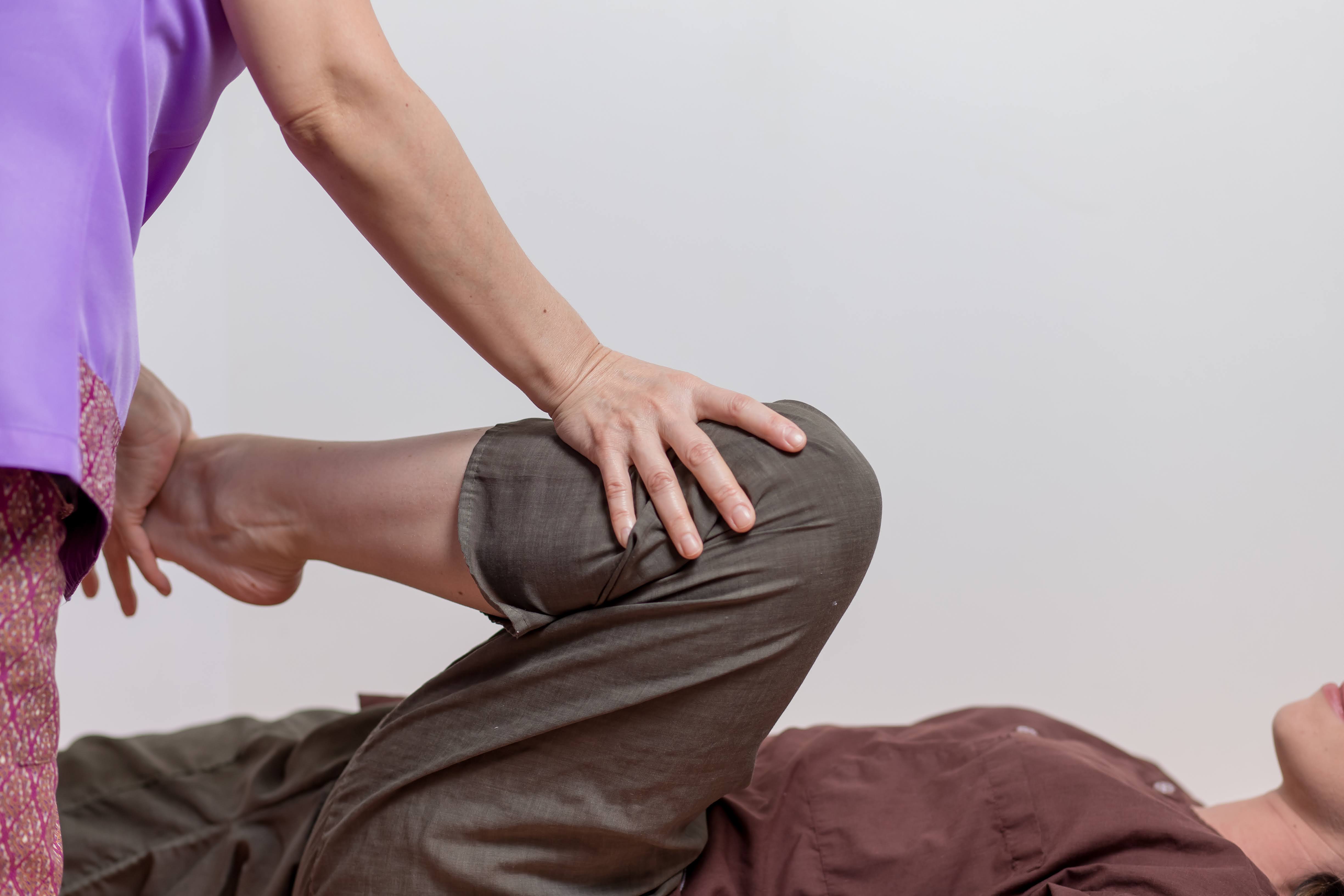
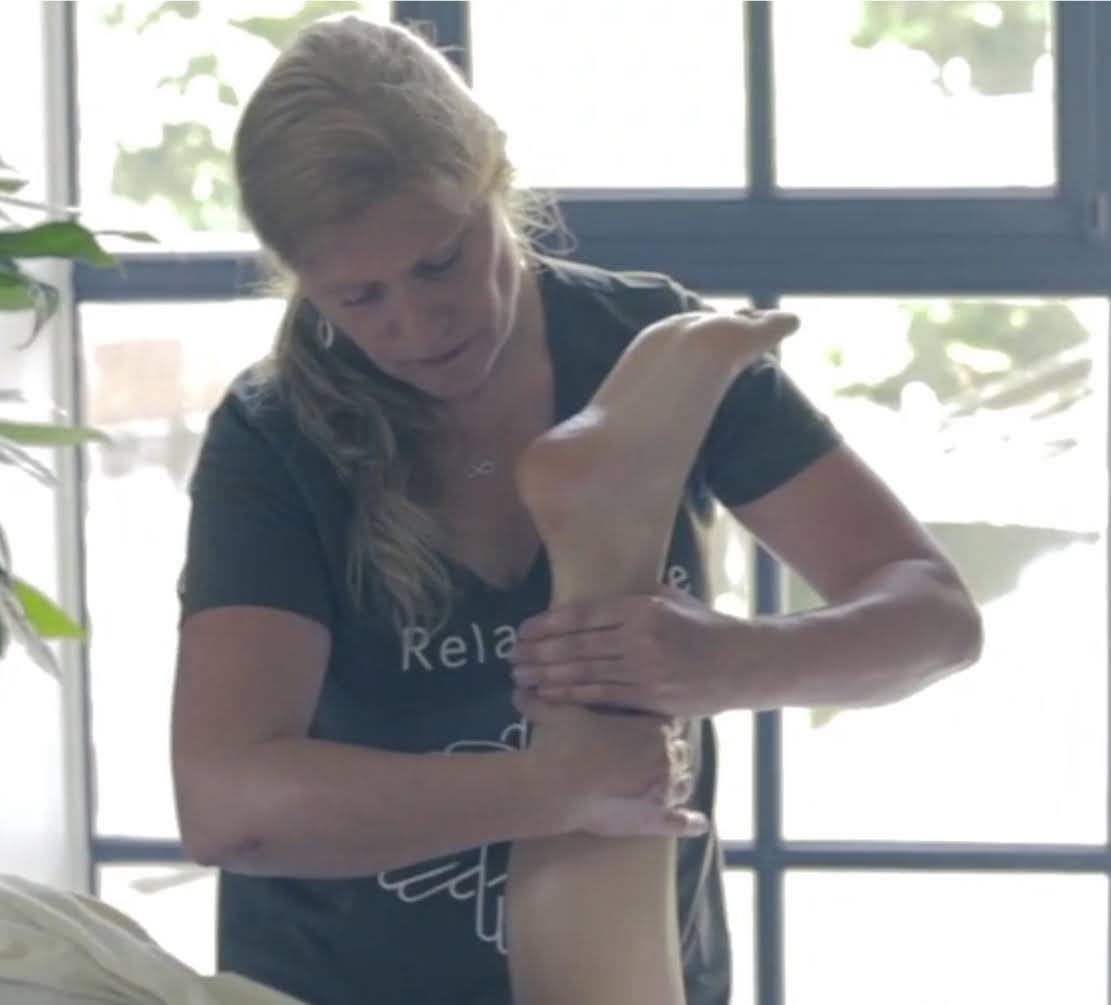
I can gently iron-out all your knots and relieve painful tension, and leave you feeling relaxed and rejuvenated – and not aching for days after.
I also give advice and exercises to help your posture, alleviate tension and make the time between treatments longer.
Trust me – I know what I’m doing. Take a look at my Testimonials – better still, try it yourself.
BLOG POSTS
 INTUITIVE HOLISTIC THERAPIST